In the last 3-4 years, I have been primarily using archive.org to store the recordings and providing access to them on my blog for listening purposes.
Unfortunately, archive.org was a victim of DDoS (Denial of Service) attacks a week ago, because of which the site is completely down and none of the resources on their site are accessible. So, when you visit the blog pages, in some pages or in some sections of these pages, you may find white space appearing instead of the audio gadget. They say that the DDoS attack has been stopped and that they are in the process of restoring their site. I am hoping that they will be restoring their services soon and I will post an update when their services are restored.
Created a page with the recordings of his compositions along with links to the lyrics and now you can listen rendering of his compositions at a single place.
Back in the 70’s when I lived in Hubbali, AIR Bangalore was a great source of numerous concerts during the Rama Navami time. Like today, it was the time, when numerous organizations would organize concerts for a week or so. And during this period, AIR Bangalore would broadcast excerpts of these concerts and probably some live concerts as well.
It was during this time, I distinctly remember listening to Namagiripettai Krishnan playing with violin and mridangam accompaniment. It was the time when Namagiripettai was the leading Nadaswaram vidwan along with Sheik Chinna Moulana Sahib, and I was a frequent listener to these two, once again with AIR being the main source. And I also remember attending a concert of Namagiripettai at Hubbali; of course I don’t remember any details.
As I was browsing thru the nadaswaram concerts, I cam across a recording of Namagiripettai with M Chandrasekaran on the violin. You get a completely different perspective of his playing and elevated by the accompaniment of M Chandrasekhar. As you listen to this concert, you can hear MC appreciating Namagiripettai in his kalyanavasantam alapana, which is definitely one of the top alapanas in that ragam. You will definitely enjoy this.
mAkElara – ravichandrikA
mOkshamu galada – sAramati
kAraNam kETTu vADi – poorvikalyANi
nee dayarAdA – vasantabhairavi
nAdalOluDai – kalyANavasantam
mOhana rAma – mOhanam
Pallavi – ShanmukapriyA
tukkadas
No idea who the mridangam and kanjira accompaniments are 😦
For quite a while, I have been hunting for this piece which was like a filler to a cassette and finally I found it. After more than 10-12 years, I had the pleasure of listening to a short alapana followed by a purandara dasa composition and then a partial alapana in shanmukapriya which too is wonderful. Hope you enjoy this:
I have added some concerts on his page – look for the section called ‘New Additions’. Most of them have very good quality recording and music of course 🙂
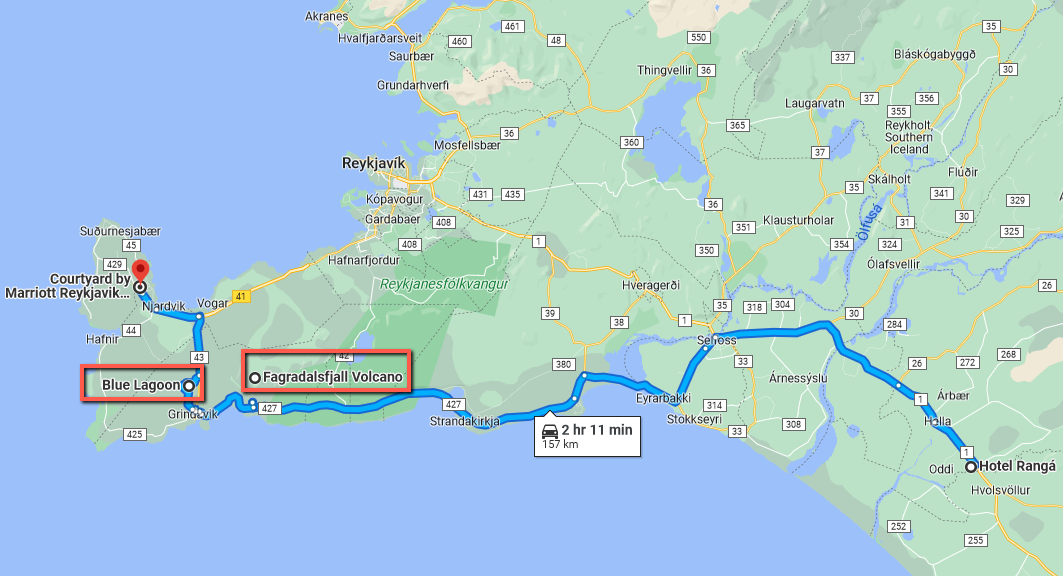
On the last day of our stay, the planned stops were the Fagradalsfjall volcano and a dip at the hot springs in Blue lagoon before we got to the hotel and prepare for departing the next morning. It was still overcast changing to rain at regular intervals and with temperatures around 4c.
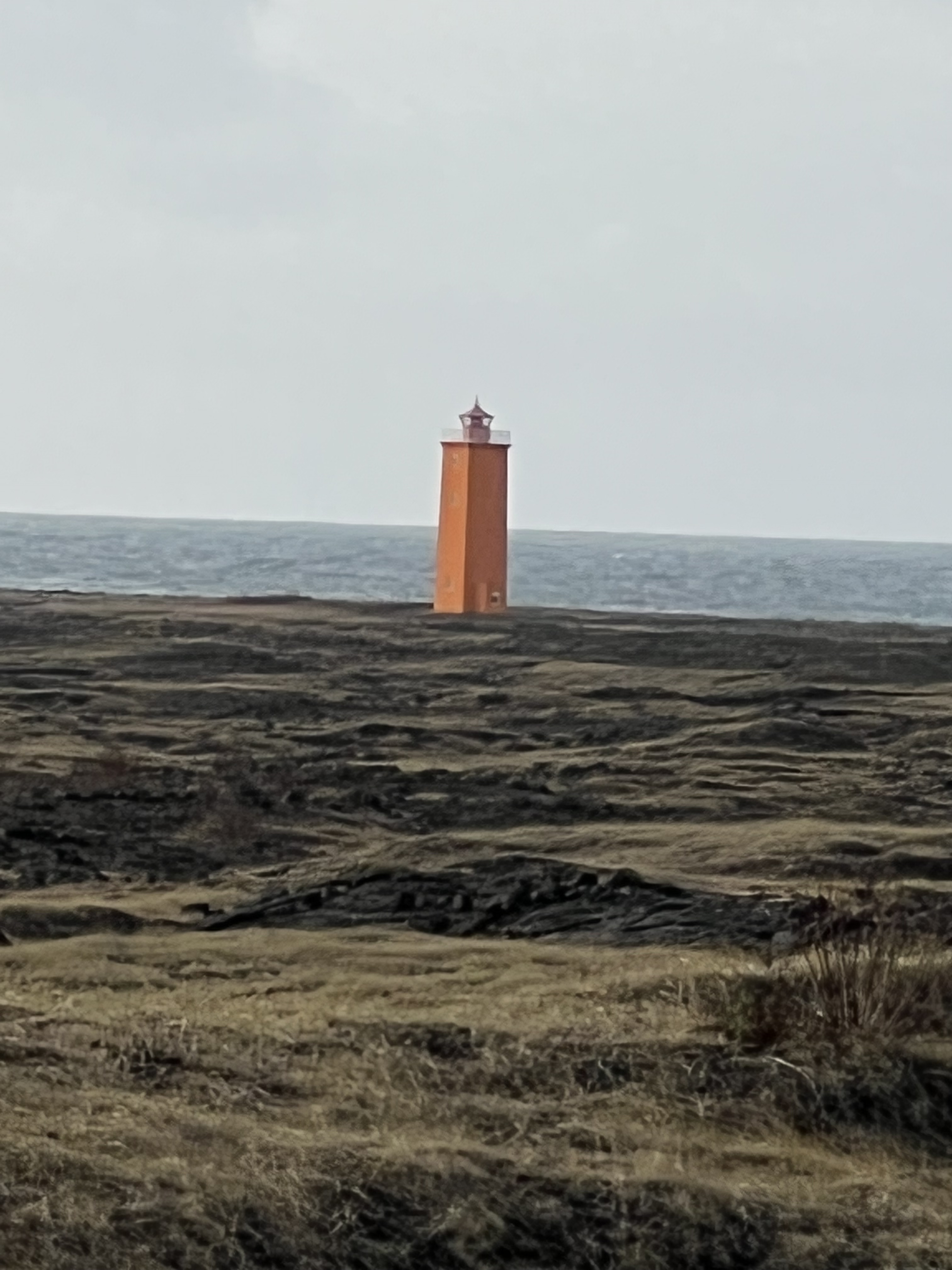
Our drive to our first took us along the coast for most of the time, giving us a view of the North Atlantic ocean. We even spotted a cute light house.
Fagradalsfjall volcano Crater
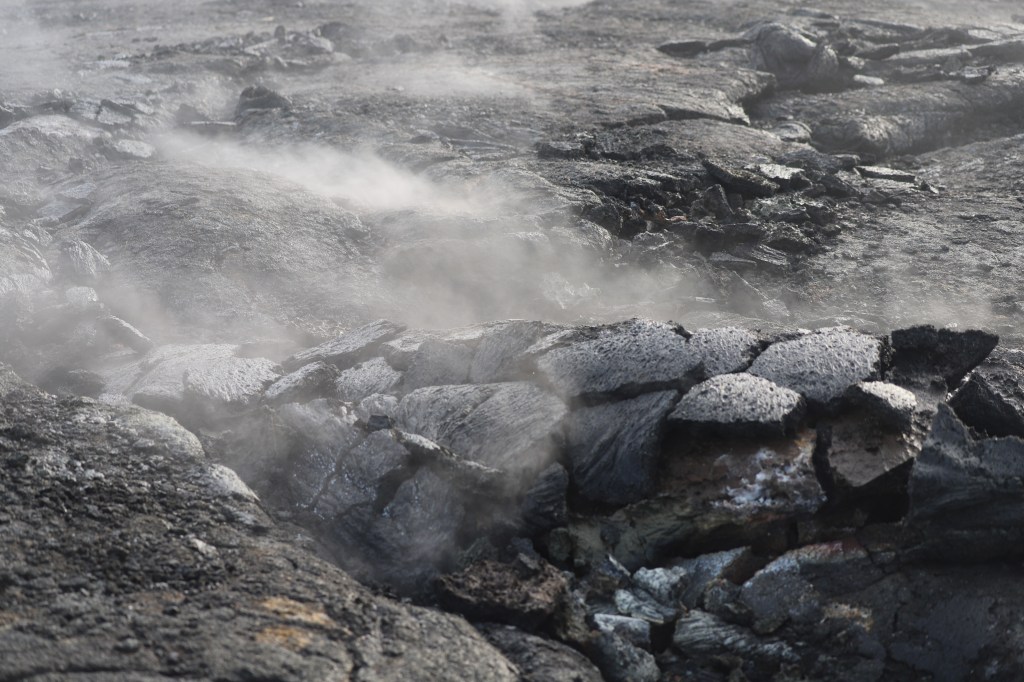
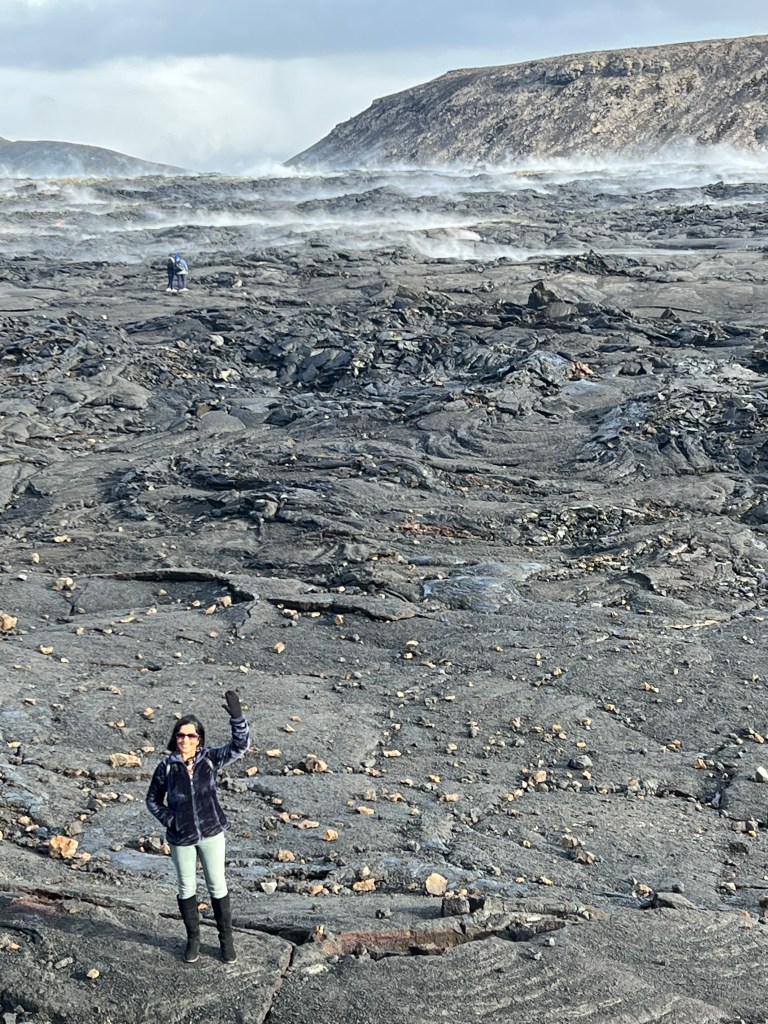
This volcano had erupted in March 2021 and once again in August 2022, obviously at two different spots; the craters to both of these spots were accessible thru hiking trails that were 3km and 6km from the base of the mountain and the longer hike was considered a difficult one involving a substantial elevation gain as we would have to almost get to the rim of the mountain. So we decided to visit the crater from the March 2021 eruption. The sight on getting to the area of the lava flow was an awesome site with huge area covered with the lava rocks of different shapes and sizes, and still smouldering; further down, the entire stretch of the flow of the volcano could be seen for quite a distance.
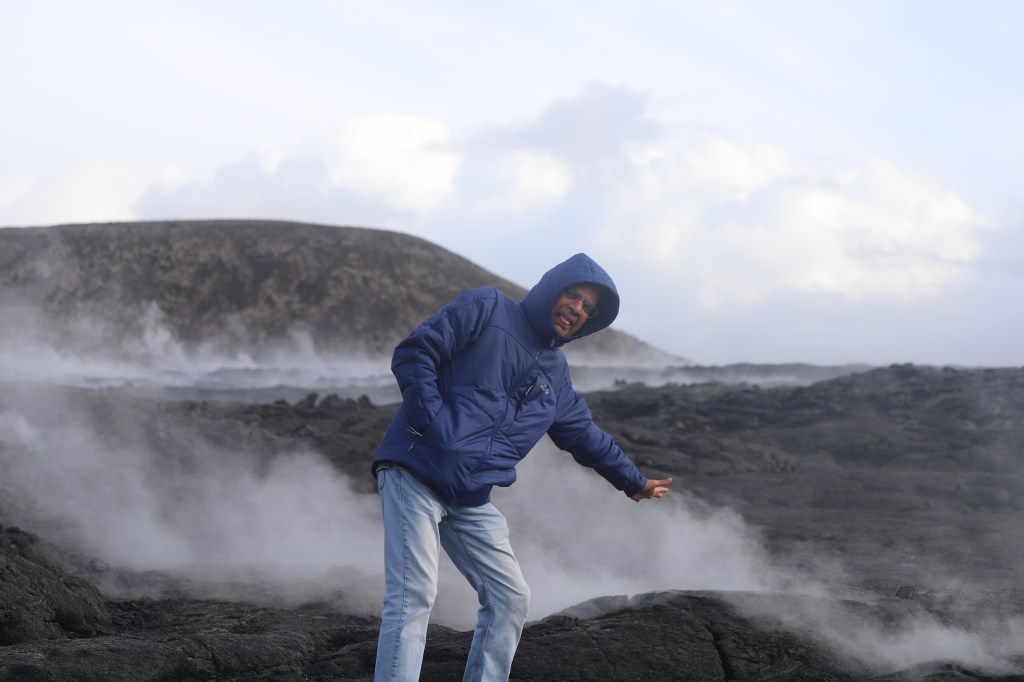
We were climbed further up to get to the crater and once again it was an impressive site giving us an idea about the power of the volcano and the destruction it could cause and here we were merrily walking around. It is simply something one has to experience for no words can describe it and the feeling of standing there. Imagine the feeling that one would have to be standing close to the flow of lava from an active eruption, as we had seen in the movie at the museum where hundreds of people were exactly doing that.
First Level of view of the Lava Flow
From the Crater
Blue Lagoon
Our last stop was Blue Lagoon which we had visited on the first day, but this time we got into the hot springs for about an hour; the contrasting hot/warm water and the cold air above the water is an interesting experience.
Wrapup
Iceland is a wonderful place to visit and its unique landscape and features shaped by the volcanic activity is a must see for everyone. Our only disappointment was not being able to see a good northern lights show, but without cooperation from mother nature on the earth and the sun flares from sun as well, is not something we cannot predict.
We chose to drive around on our own and that gave us the flexibility to choose the places to see, time to spend at each location etc. We could randomly stop anywhere we wanted and spend time as we pleased which we could not have done if we had used the tour operators.
We were forewarned that the weather is quite unpredictable and that is exactly what we experienced. This is something that anyone planning to visit needs to be prepared for.
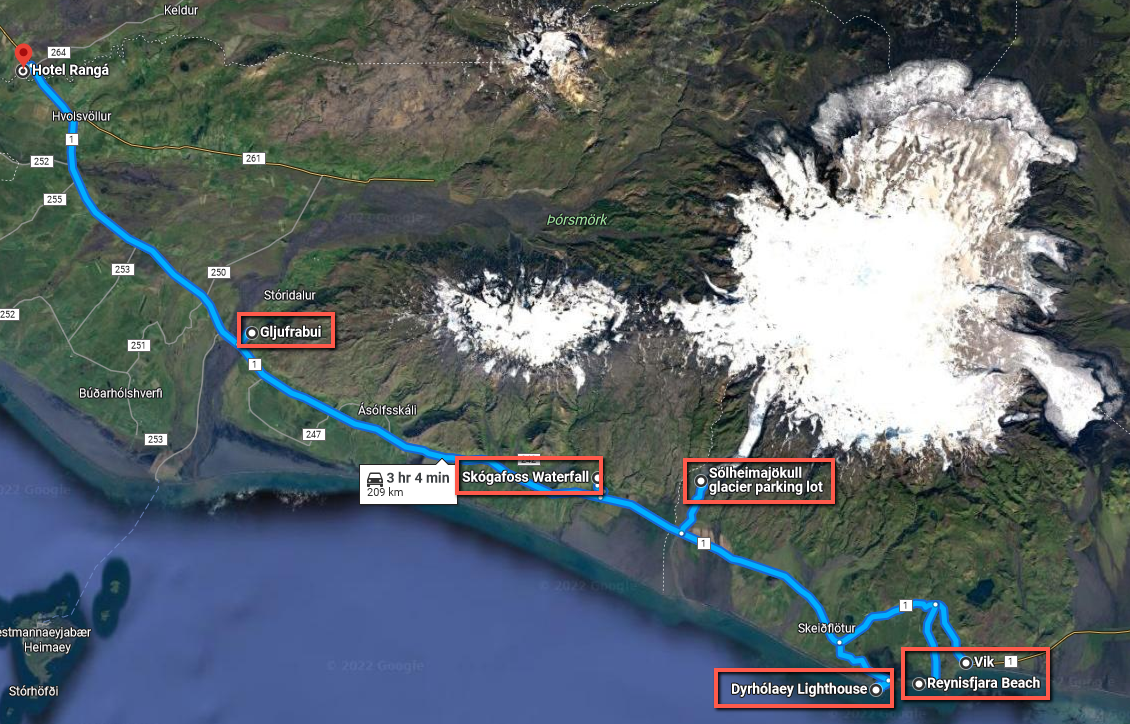
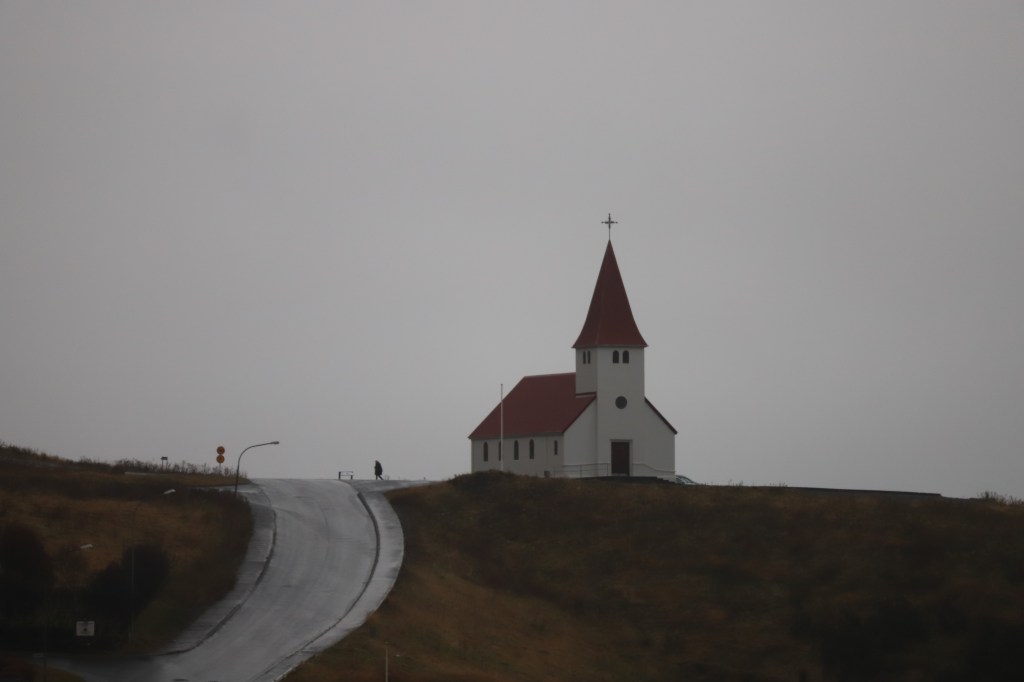
It was back to rain and wind though not that strong as we stated out in the morning towards Vik, which is famous for its black sand beach, water falls on the way and the edge of a Glacier.
Seljalandsfoss
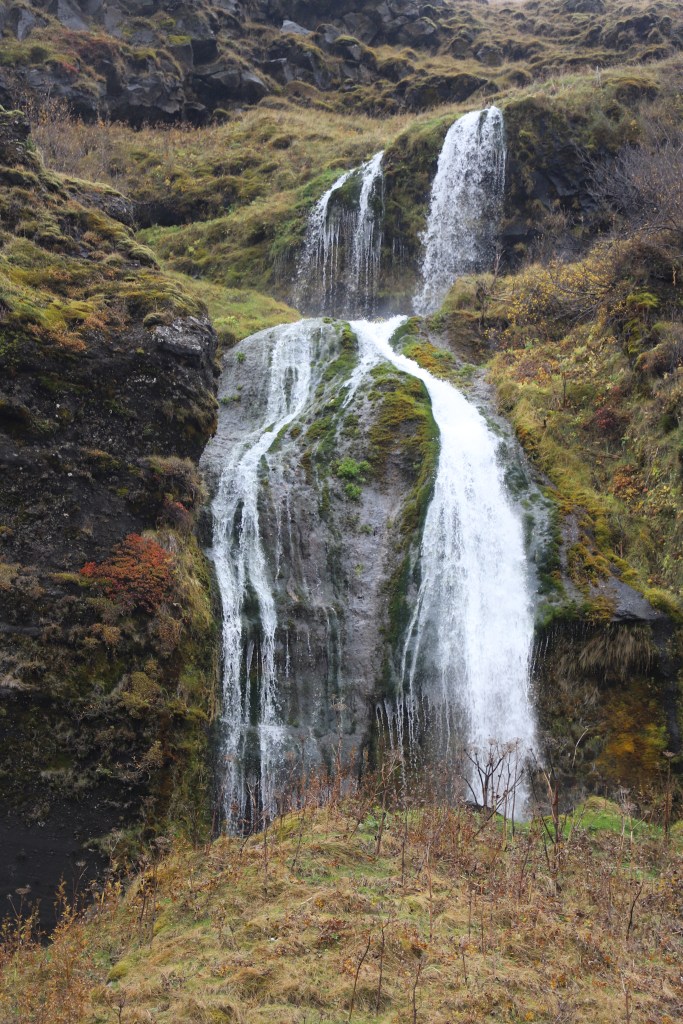
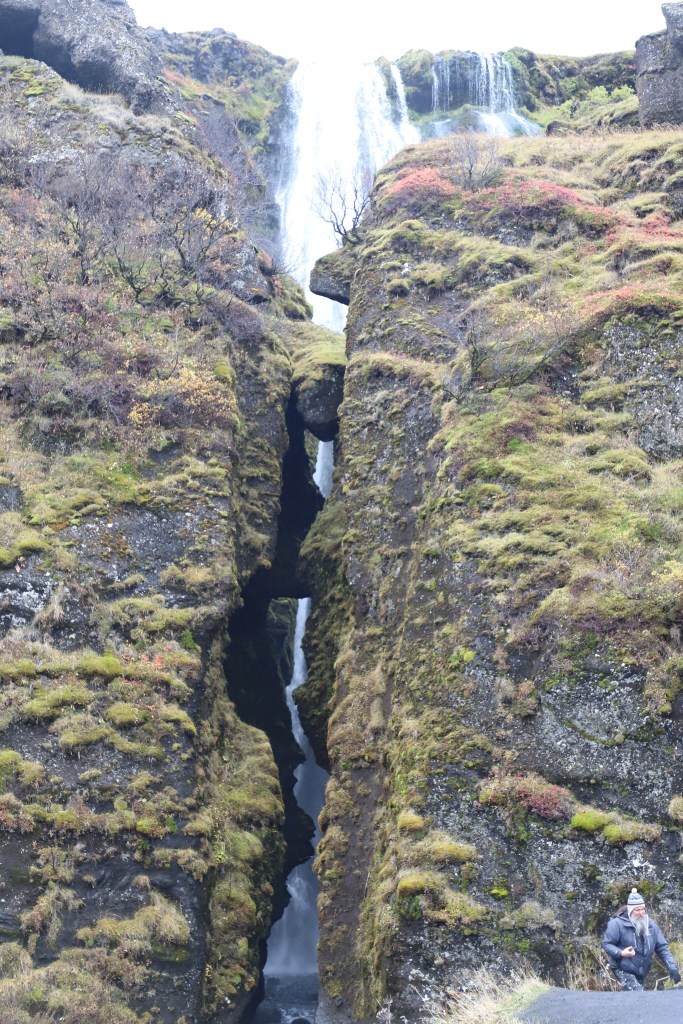
The first stop was the waterfall Seljalandsfoss (by now you would have realized that ‘foss’ is ‘waterfall’ in Icelandic), which is actually a bunch of falls next to each other and visible from the road as you head west towards Vik. The main falls, clearly he most impressive of the set, was the one with people milling around it and also on the walkway behind the falls. The falls that was farthest removed from the main one, is completely behind a rock formation and was a place to get wet from the spray from the falling water.
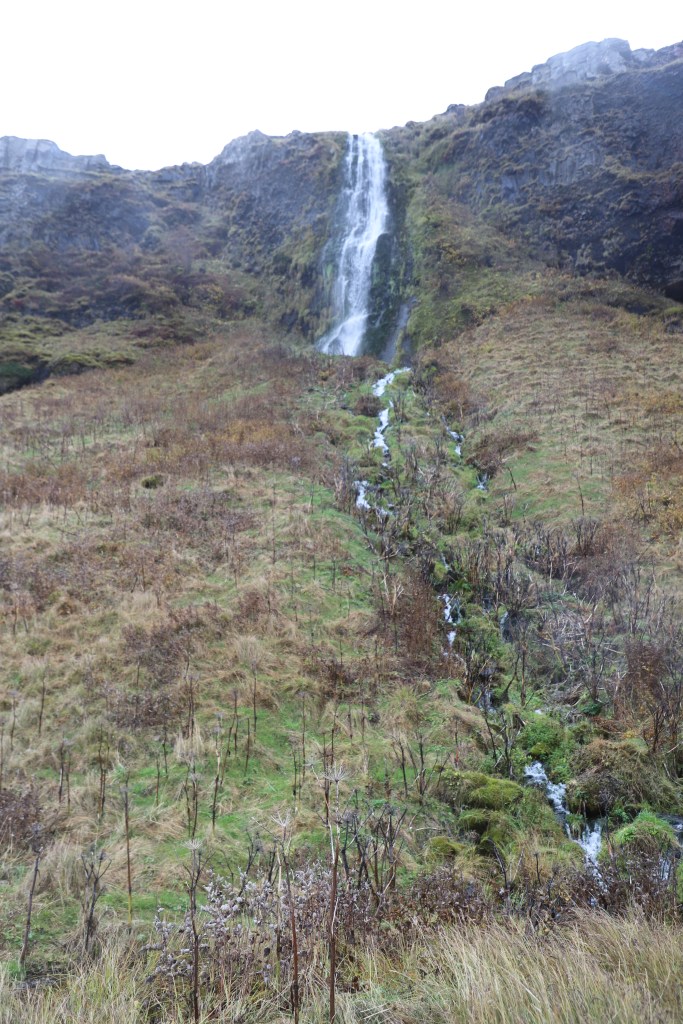
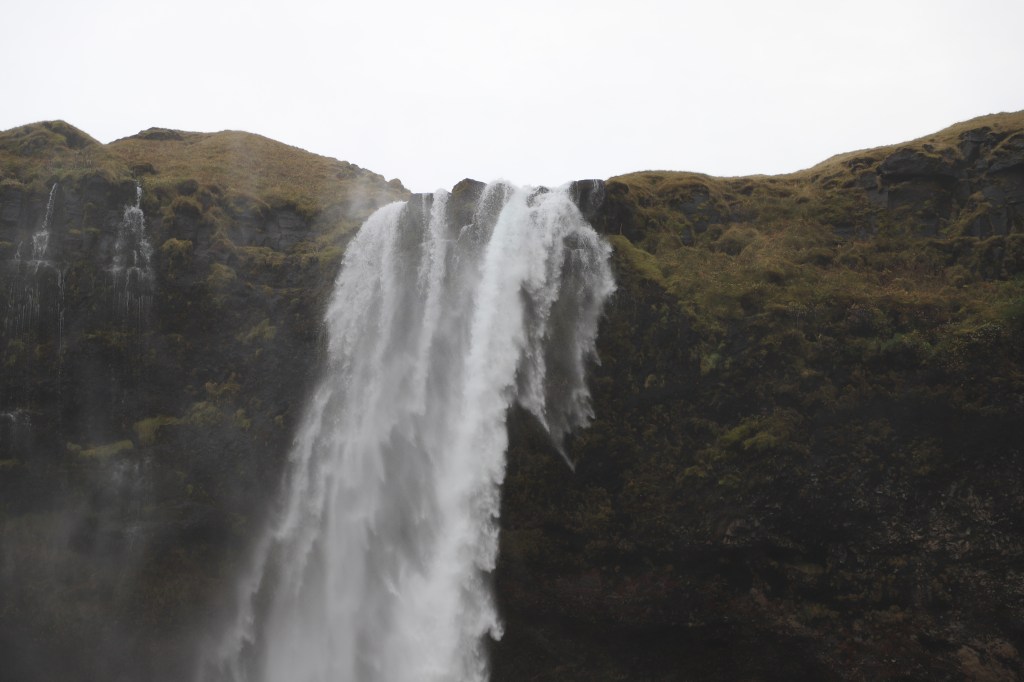
After spending time looking at the series of falls, as we headed towards to the Skógafoss waterfall, on the mountains to the left us (as we drove) we got to see numerous waterfalls of varying sizes and heights; the wind was so strong that the water was just flying away midway and never reaching the ground at all. And dotting the mountains were sheep grazing away at heights that made us wonder as to how they were able to get so far up.
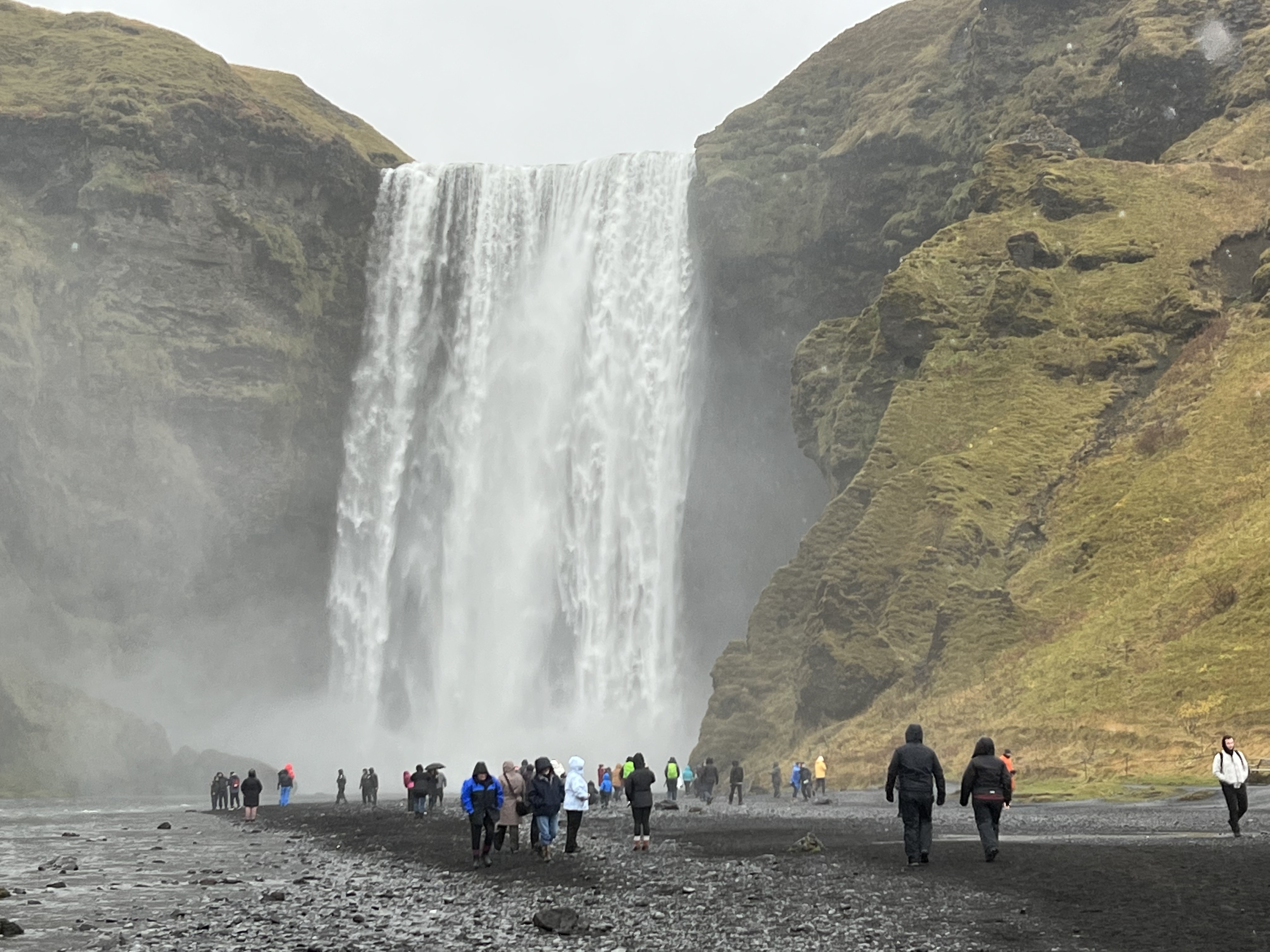
Skógafoss
After getting a view of the Skógafoss falls from the ground level, we climbed up about 600 steps to get an awesome view and power of the falls from above.
These two falls and the numerous ones in between are fed by the melting snow up in the mountains that you can see in the map, which obviously led us to the edge of the Sólheimajökull glacier. After a short hike from the parking lot, we got to the edge of the glacier – one thinks of a glacier with a sense of awe and expecting that the melting edge would be a spectacular view, but the reality is that the breaking off of the pieces of the glacier happens so very slowly and it is only possible to imagine the breaking off the chunks of ice that are down the river created by the melting of the ice.
Dyrhólaey Lighthouse & Viewpoint
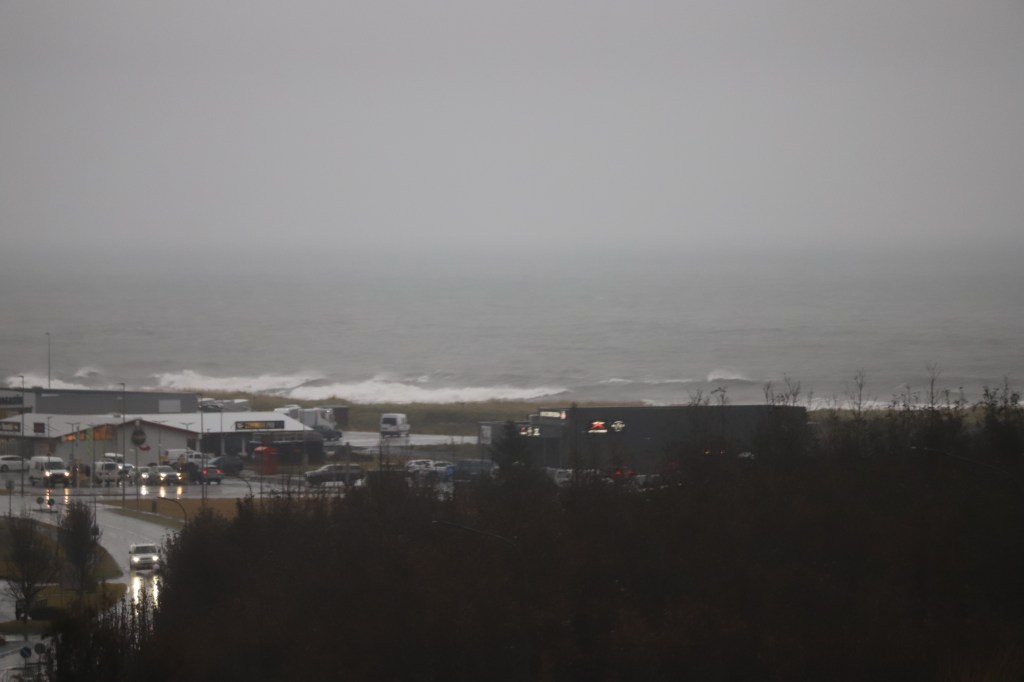
From this spot, which is at an elevation, one is supposed to be get beautiful view of the ocean, spectacular rock formations, the black sand beaches on either side and the puffins that live around. But by the time we reached this place, the rain and wind had intensified and added to that was the fog making the visibility quite poor. After having a quick peep at the lighthouse and the black sand beach below, we left for the town of Vik to get lunch.
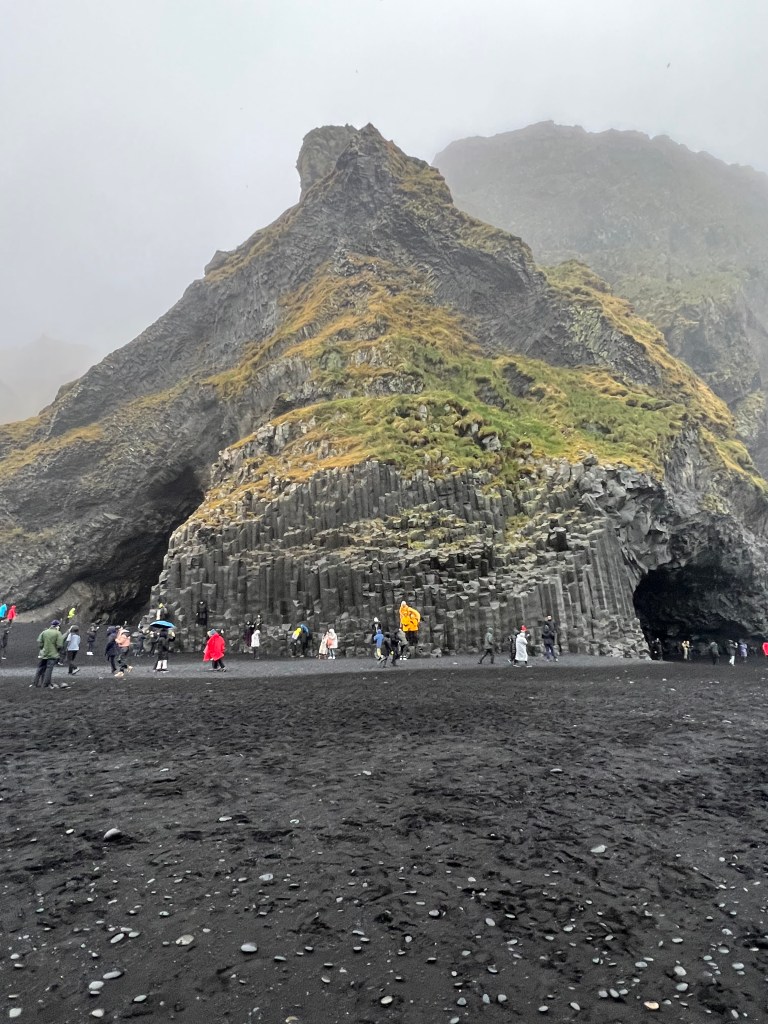
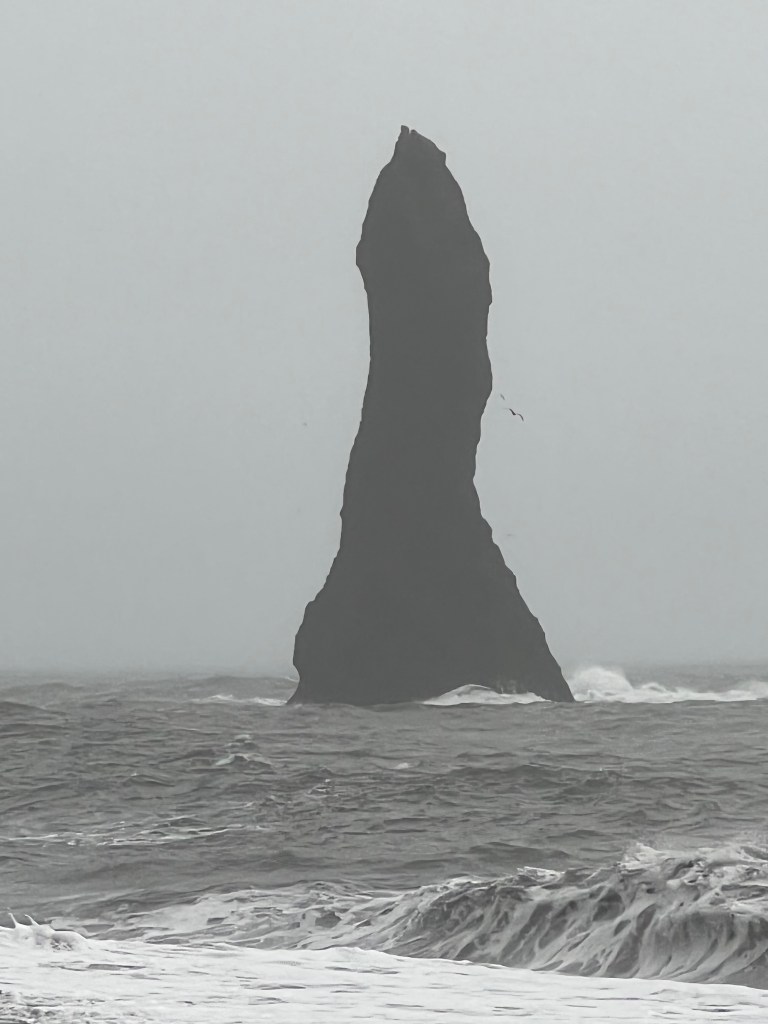
Black Sand Beach Reynisfjara
This is an extremely popular spot for tourists for good reason and it was teeming with people in spite of the rain and wind, and also warnings not to get close to the water because of extremely rough waves and the rip tides.
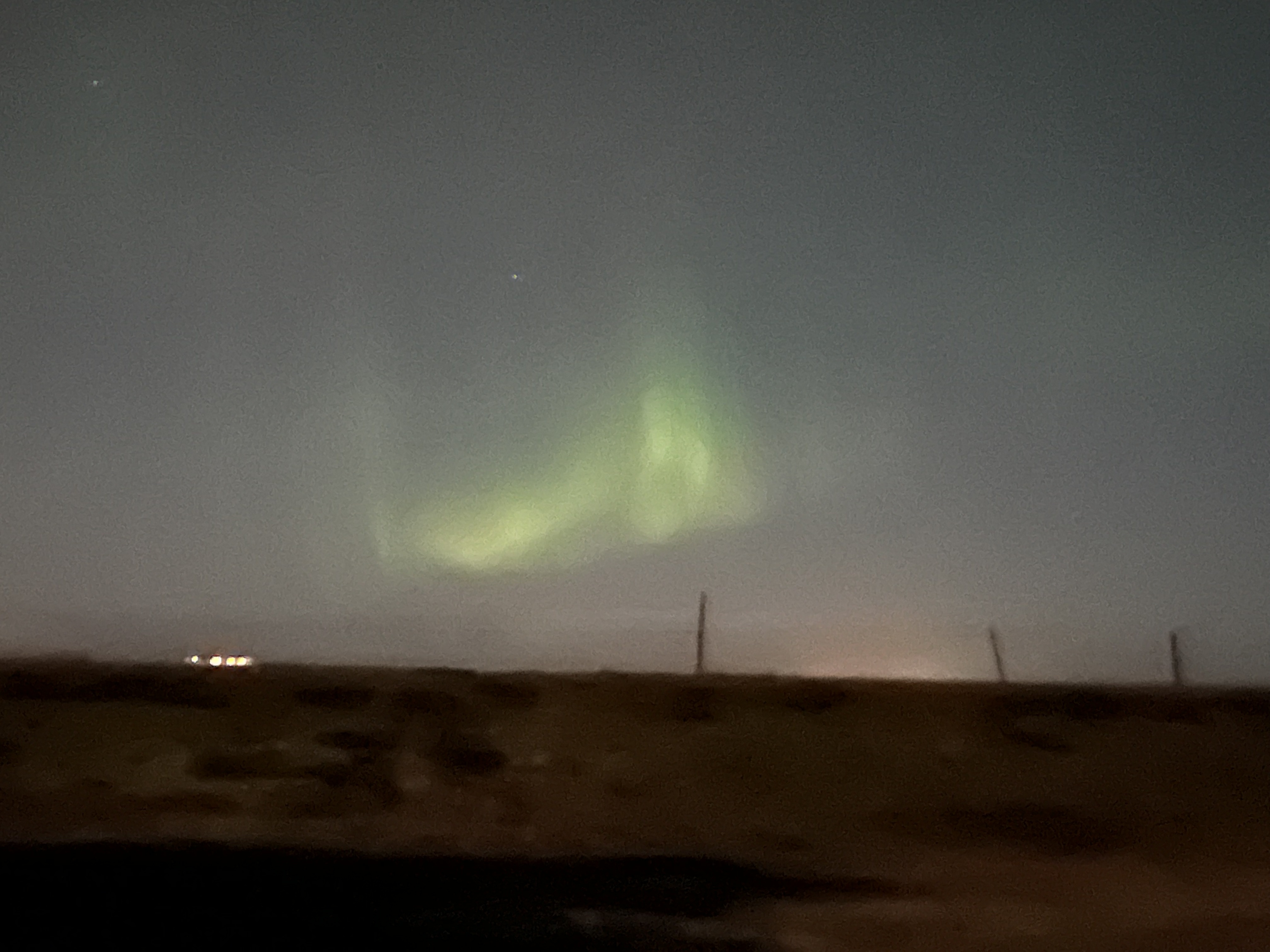
We were hoping to see the northern lights during our stay and the continued rainy and overcast weather was making it seem that that there was little chance that we would witness it at all.
The hotel we were staying was in a remote area and perhaps one of the best places to see the northern lights from, of course if that did happen. The hotel had a nice arrangement that they would call the rooms when they found that the northern lights were putting on a show any time during the night. Although the staff were not very doubtful about the chances for a show that night, we did get a call that got us running out along with all the guests as well. At best it was a mini show that lasted for 15-20 minutes and the lights were quite low in intensity. The interesting find was that my iPhone camera was able to capture the image very well, perhaps even better than that seen with our eyes.
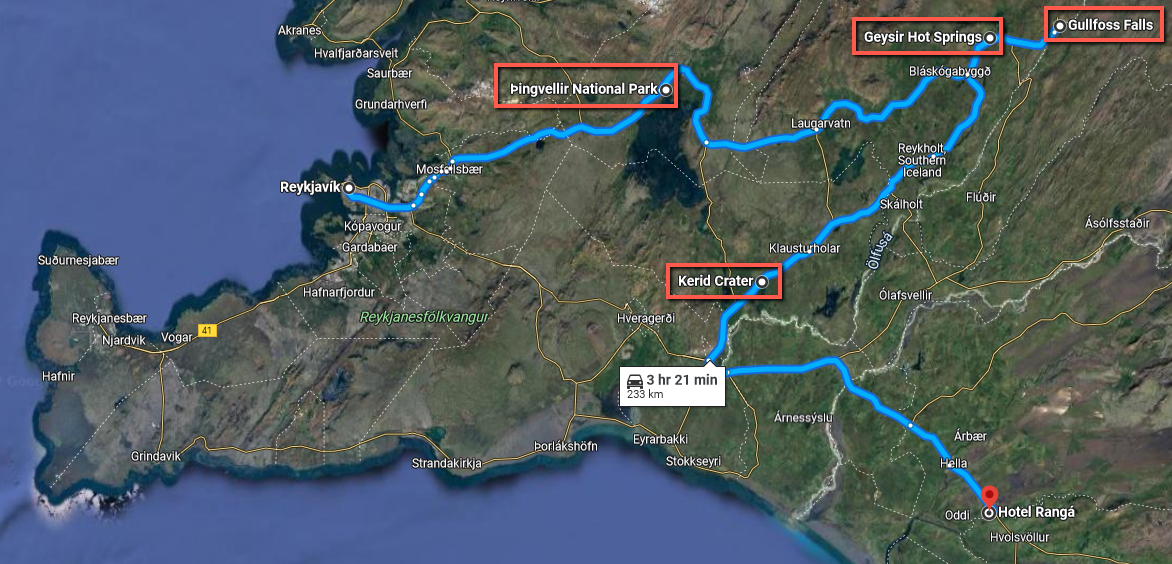
This was the day to take the Golden Circle route to view the famous attractions which we expected would be the destination for other tourists as well. And we were not wrong as we saw dozens of tourist buses in each of these attractions and parking in a couple of these areas turned out to be as bad an experience as parking in New York city!
It was a beautiful sunny day with no signs of the rain and wind of the previous day, still on the cold side however around 4C.
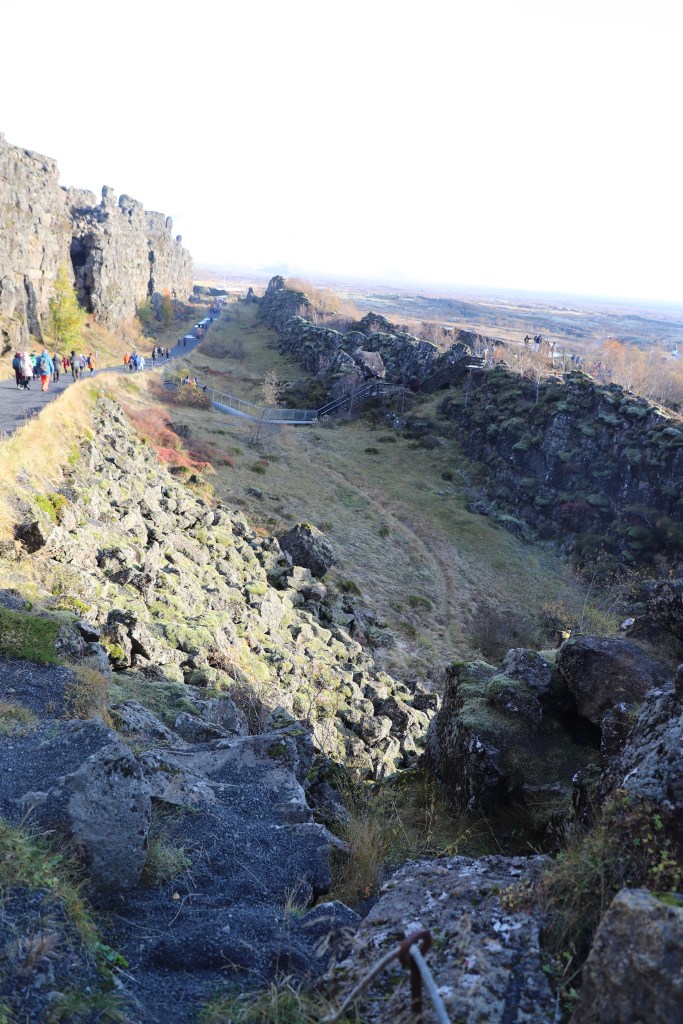
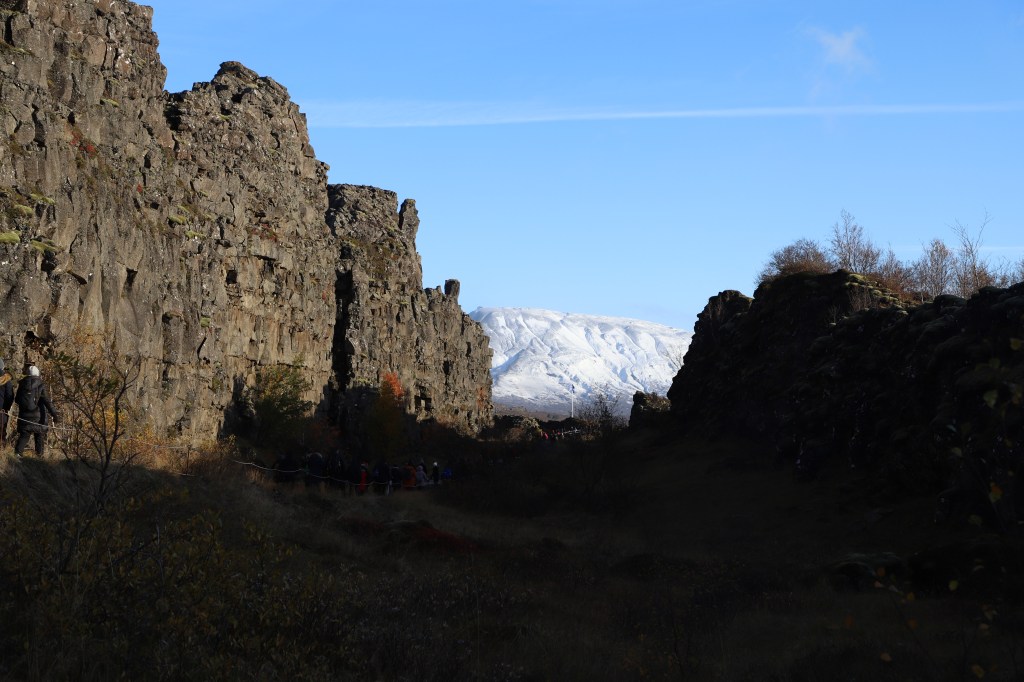
Thingvellir National Park
This park is a part of the Atlantic Ocean ridge that runs through Iceland because of which it features a unique ecosystem shaped by the erosion of the earth’s crust in the gorges and fissures. It is a haven for hikers in that there are numerous hiking trails of varying degrees of difficulty.
It is in this area that the river Öxará plays a major role in this area making it a perfect place for settlement with pastures, firewood and water. And it has been place where numerous events related to the history of Iceland have taken place. Now being a national park, it is a protected area and extremely popular with tourists year around.
The waterfalls you see, flows from the north american plate at a higher level down into the ridge; the difference in the levels is accentuated by the canyon walls as one walks thru to the waterfalls. Apparently the falls has been manipulated in other words man-made to make it an impressive sight and that it is.
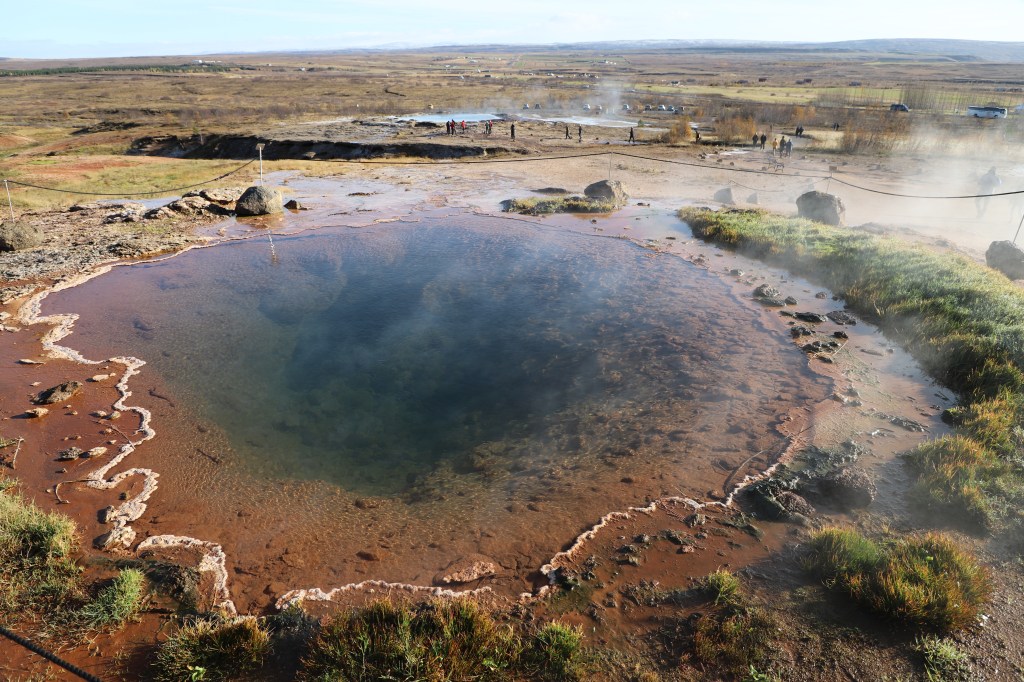
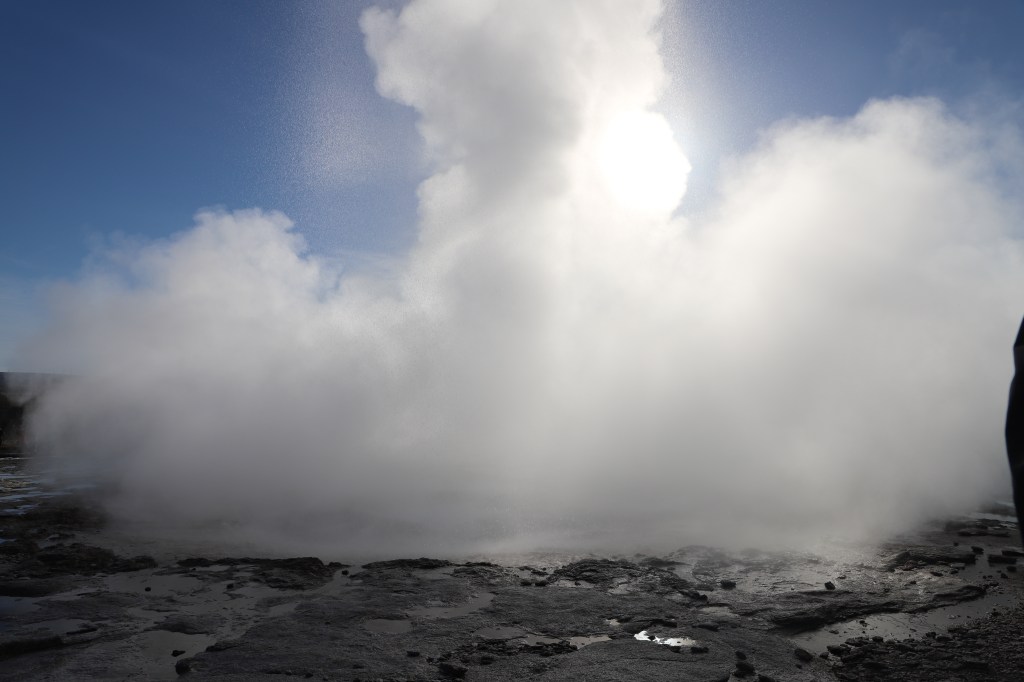
Geysir Hot Springs
This is approximately a one square mile geothermal field aligning with the Atlantic Ocean ridge, with a couple of active geysers, boiling mud pits etc. It is a certainly a popular area, where people are lined up waiting for the Strokkur geyser to spout hot water steam which happens once every minute or two. And as expected, the strong smell of sulfur is all around the area.
While it is a great spot to visit, I have to say though that this geyser pales in comparison to the geysers, hot springs, boiling mud pots etc. in America’s Yellow Stone park, which I have seen a few years ago. Yellowstone is sitting atop a super volcano and it is not surprise that this area and the Yellowstone feel similar.
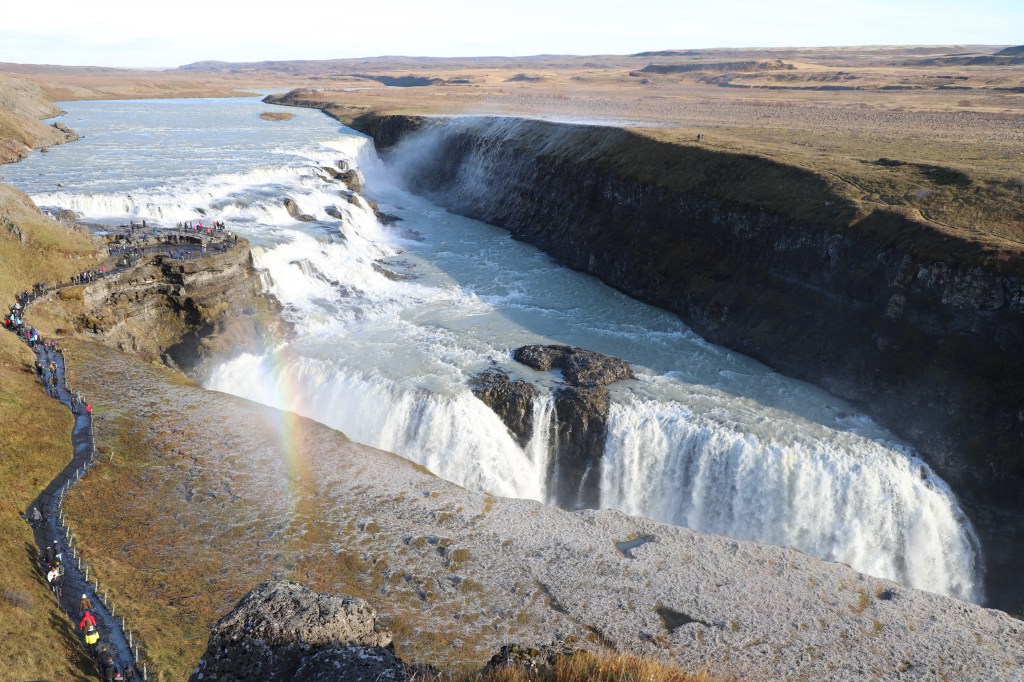
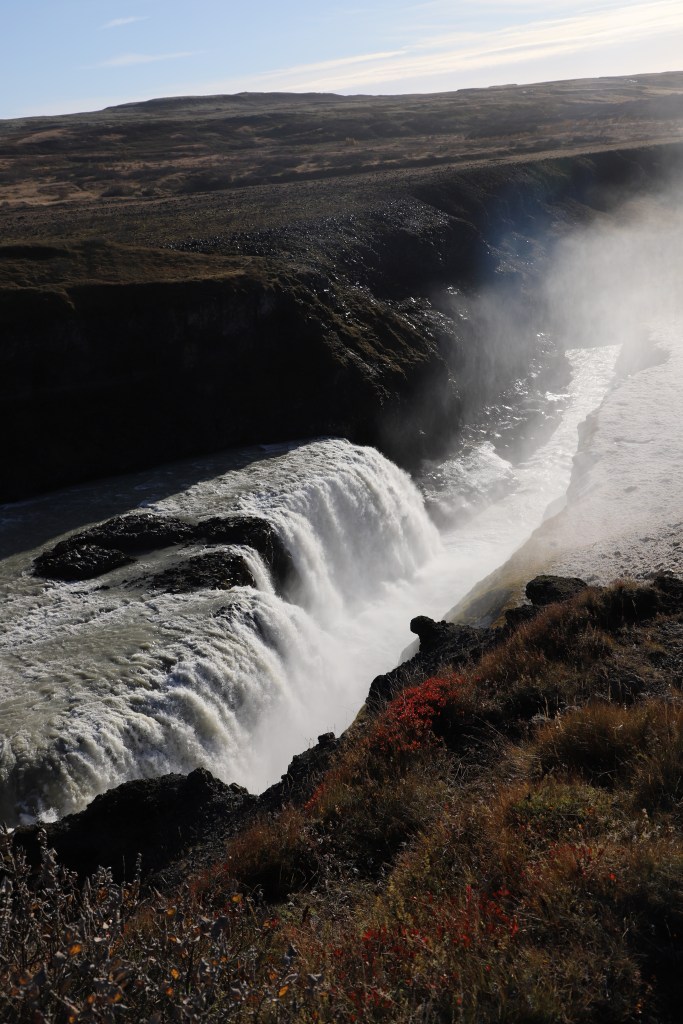
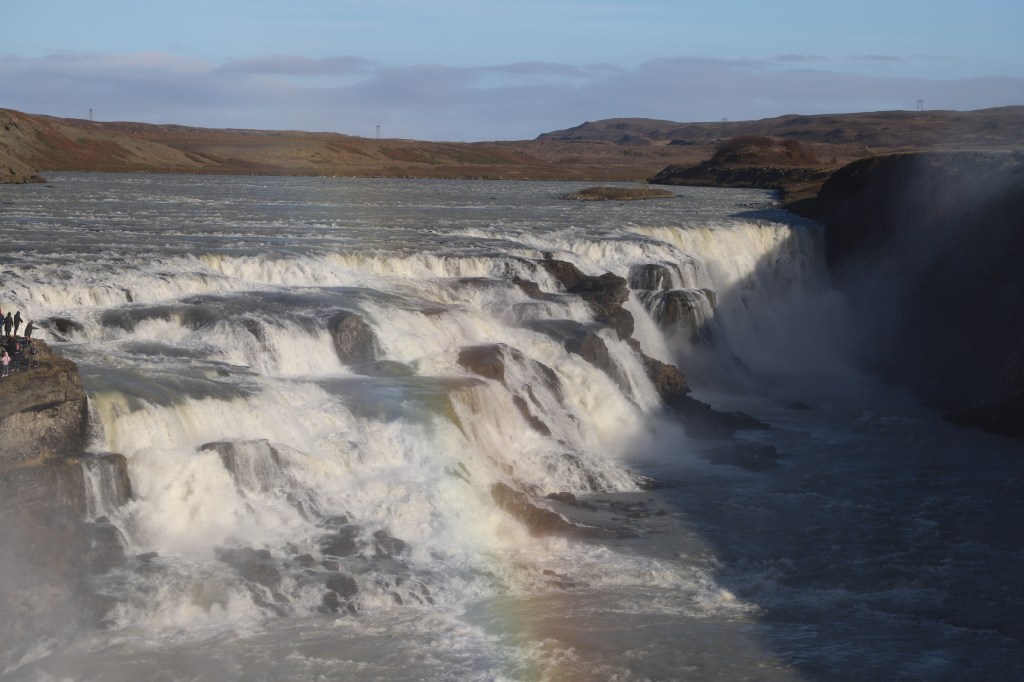
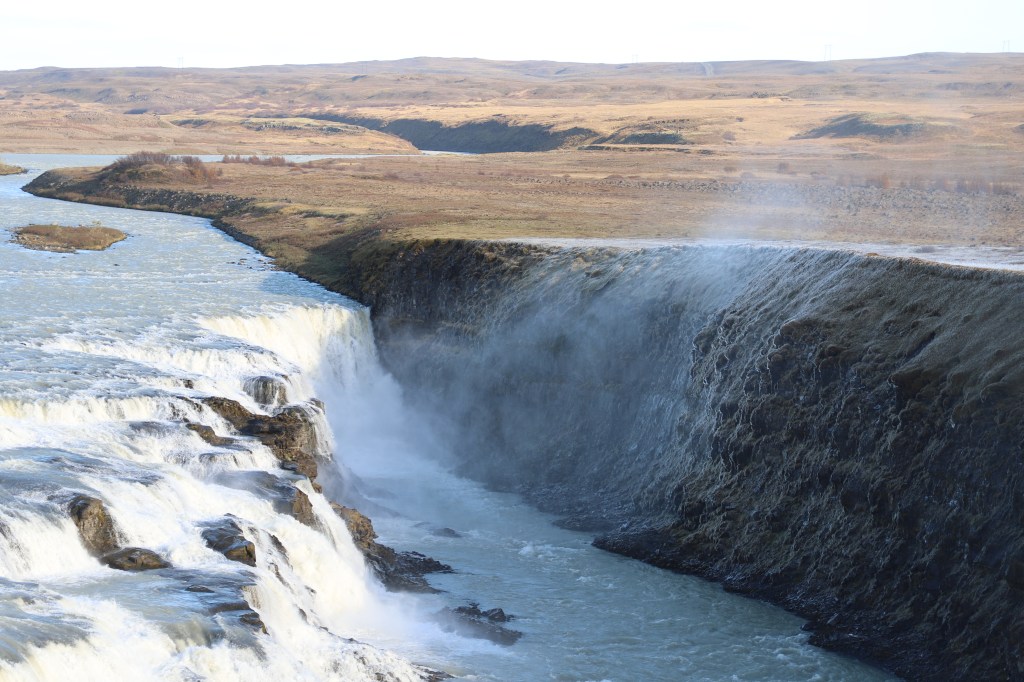
Gulfoss Waterfalls
To me this waterfall was the most impressive spot in the Golden Circle as you can experience in the video below. On the river Hvítá which is fed by the glacier Langjökull, it is an impressive falls with intensity close to the Niagara falls. With two stages, we could view the falls from numerous locations and levels (close to the water and from up above). Typical of such powerful falls, the water descends into Gullfossgjúfur canyon, a deep canyon more than 200 feet tall on either side.
Getting to the lower levels and close to the water means that you get drenched from the water spray; if you are planning to get close beware of this fact.
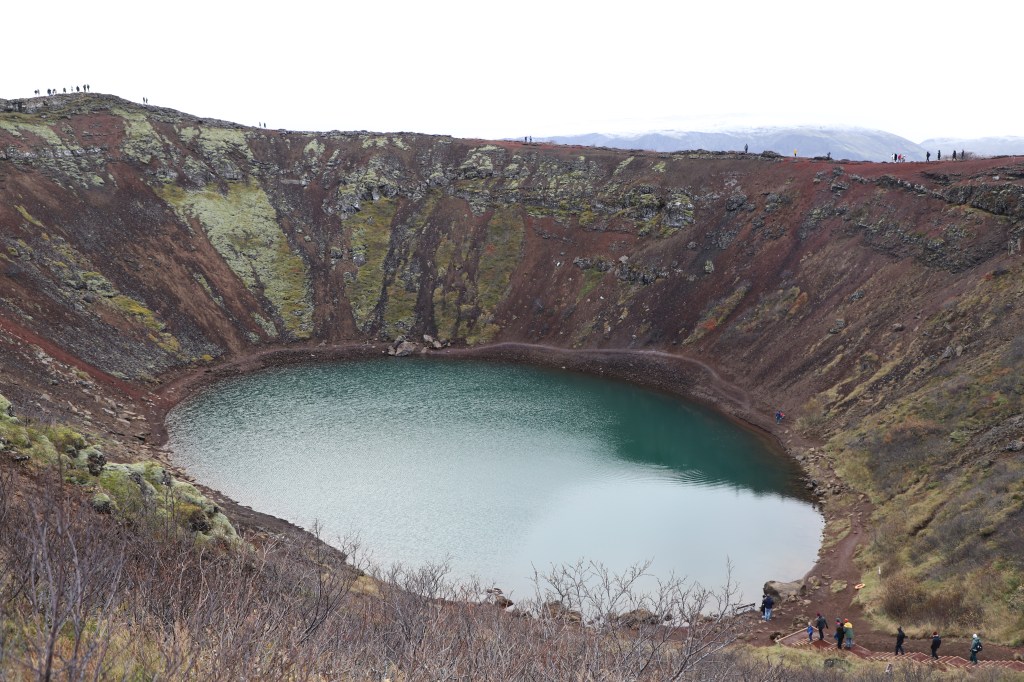
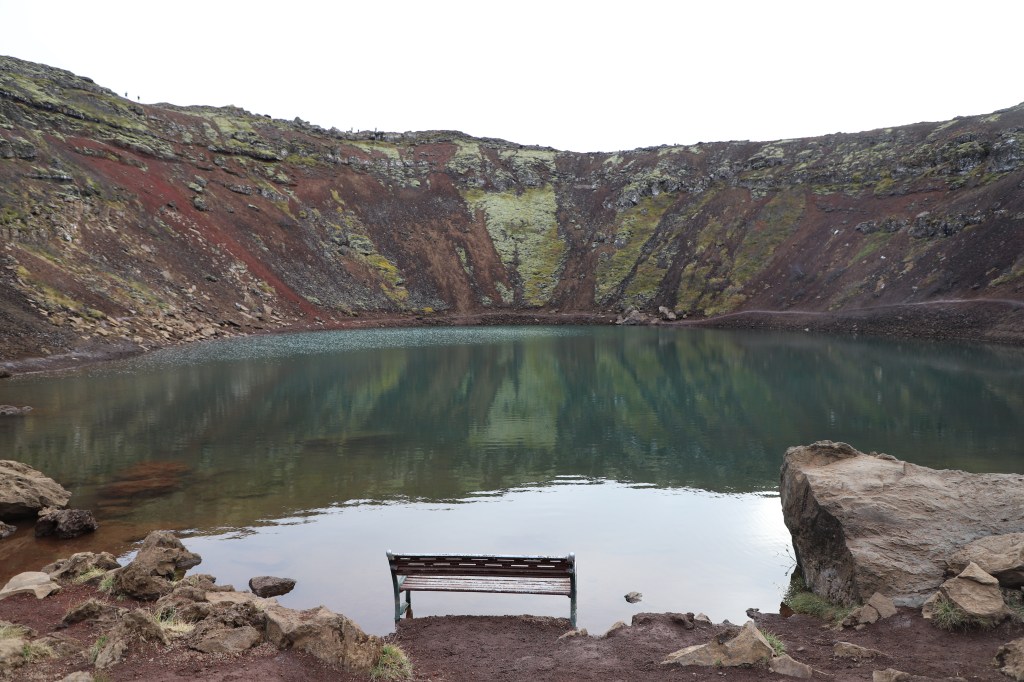
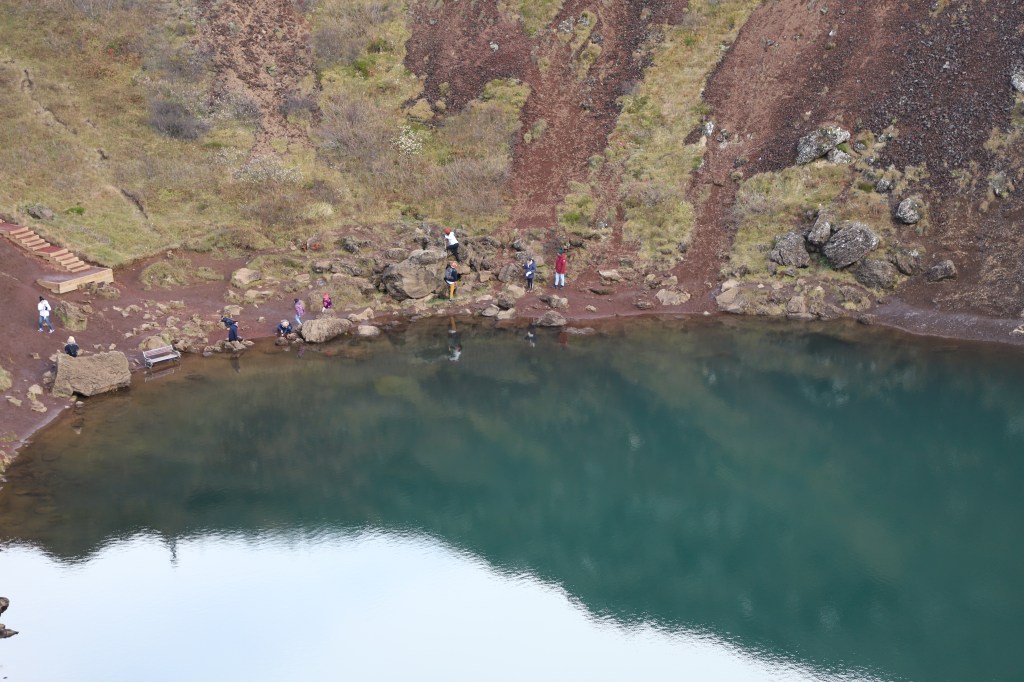
Kerig Crater
Our last stop for the day was the Kerig crater, a unique volcano with an aquamarine blue lake atop its caldera. When this volcano erupted 3000 years ago, the caldera did not blow out entirely but fell back to create this crater and over centuries the crater was filled with water forming this beautiful lake.
We hiked around the top of the crater getting a complete view of the crater and finally climbing down to the lake. There is a hiking path along the lake too, but having seen a couple of slip on that trail because of rains on the previous day, we decided not to hike but just enjoy the scenery.














 Shankar Krish's Blog